Why the Railway Network in India Is Different From the Rest of the World
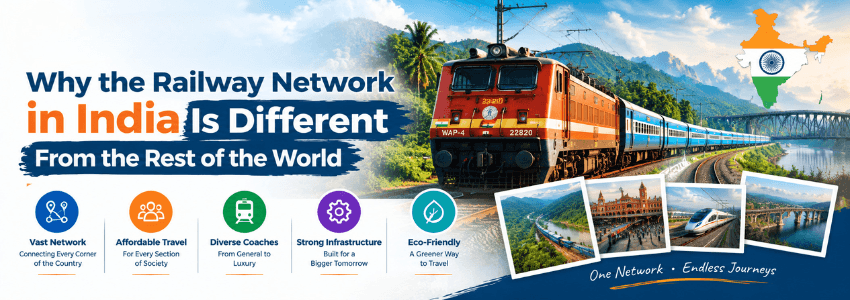
Table of Contents
Indian Railways is intricately linked to everyday movement, trade, and the development of regions. The railway network in India is very extensive and spans various cities, towns, industrial towns, and remote regions.
The Rail Network in India is also unique; it carries heavy passenger loads and freight across various geographical locations.
What Makes the Railway Network in India Different?
The railway network in India has grown with the demand for cheap long distance transport, geography, and the large population of India. Metropolitan cities are linked to smaller towns, tourist centers, and industrial areas by trains.
The Rail network in India also consists of intercity trains, commuter trains, and freight trains. This combination gives Indian Railways a distinctive operational structure.
How Large Is India's Railway Network?
According to the Indian Railways Year Book, the indian railway network length at the end of 2023-24 was 69,181 route kilometres. It also recorded more than 109,000 running track kilometres. It also recorded more than 109,000 running track kilometres.
This makes the Rail Network in India one of the world's largest railway systems by route length. The phrase largest railway network in the world can vary depending on whether route kilometres, track kilometres, or other measurements are considered.
The scale of the railway network in India also requires extensive maintenance, signalling, electrification, capacity planning, and services to Check PNR Status.
Indian Railway Zones and Their Role
The Rail Network in India is structured in two levels of hierarchy: railway zones and divisions. The indian railway zones contribute to the management of train operations, infrastructure, maintenance, and passenger services in various regions.
This design facilitates the effective management of this size of system with regional control.
Understanding the Indian Railway Network Map
The map displays indian railway routes, representing the connections between various regions and cities in India. The railway network in India runs through plains, mountains, coastal regions, and populated areas.
If you are travelling around multiple railway zones, then knowledge of the Rail Network in India and Train Running status might help in making the journey easier.
Major Railway Routes Across India
Delhi, Mumbai, Kolkata and Chennai are connected by main routes. These corridors are the site of much passenger and goods travel.
The Rail Network in India also connects small cities and towns, which adds to railway connectivity in India for smaller cities in India.
Major Railway Stations in India and Why They Are Important
Major stations are important points of exchange in the Railway network in India. Many stations like New Delhi, Howrah, Mumbai Central & Chennai Central are the junctions of multiple routes and services.
These are also the major railway stations in India that offer ticketing, waiting areas, food facilities, as well as local transportation links.
Food Delivery in Train service can assist people in making food arrangements during their travel.
Indian Railways vs Other Railway Networks
For an indian railways vs other railways, network size, passenger demand, geography, freight movement, and technology are important.
The Rail Network in India has a strong focus on mass passenger transportation alongside freight. There are other combinations of conventional, suburban, and high-speed rail services in other countries.
Hence, the scale of the Railway network in India should be known by using it in terms of use rather than one measure.
Indian Railways vs China Railway: What Is Different?
An indian railways vs China Railway comparison highlights different priorities of infrastructure. China has built a large-scale high-speed railway network, and India has a wide variety of conventional and modernised railway networks.
With the upgrading and extension of infrastructure, the railway network in India continues to cater for a huge number of passengers.
How Railway Connectivity Supports India
The Rail Network in India is used to link economic centers, educational institutions, workplaces, and tourist destinations. Rail freight also plays a vital part in industry and supply chains.
In this way, the railway network in India is playing a vital role in the transportation system of India. Better infrastructure and railway connectivity in India could better enable regional mobility.
Railway Network Expansion in India
Expansion sees new railway lines built, further lines added, electrification, upgrades to signalling, and redevelopment of stations.
With the expansion of the Rail Network in India, technology is also playing a vital part in its functioning and in providing information for passengers.
How Indian Railways Connects With Metro Networks
Metro systems and buses/combined transport are usually linked to major railway stations. These are connections that allow passengers to continue their travels beyond a city when they reach that city by train.
The railway network in India is thus used in conjunction with urban transport, particularly in metropolitan areas.
How Indian Railways Connects With Air Networks
Metro, buses and road networks are potential ways to get to the railway station in large cities. This provides flexibility to travellers in regard to rail and air travel combinations.
These links allow the Rail Network in India to be useful in multiple modes of transport throughout the state.
Challenges for Passengers
Travel planning can be complicated by a large railway system. Passengers require information on schedules, platforms, delays, and reservations.
When you don't have access to the internet, you can use Offline Train Tracking for travel information and updates.
It is also important for passengers to be aware of Indian Railways Fine Rules regarding railway tickets, rail luggage, and all other fine rules.
How to Order Food During a Train Journey
Food planning is an important part of long-distance travel. Passengers can arrange meals before boarding or use food delivery services available at selected railway stations.
Users can also find food stations on their train route, and the options available when travelling to find Chinese food on train.
Conclusion
The scale, geographical extent, passenger demand and mixture of passenger and freight services are the features that set the Indian railway apart. As the Indian railway infrastructure it evolves, cities, towns and economic centres remain connected.
For passengers, understanding routes and available services can make train journeys easier to manage. While travelling, YatriRestro helps travellers arrange food during their travel and while planning food during long distance travel.
Frequently Asked Questions
Is India's rail network one of the largest in the world?
Yes. The Indian Railways' network of 69,181 route kilometres was operational as of the end of 2023–24.
How is Indian Railways divided?
Indian Railways is segmented into zones and divisions that handle train operations in the respective areas.
How long is Indian Railways?
The length of the route recorded in 2023-24 was around 69,181 kilometres.
How can passengers track their train?
Passengers can use official railway services and recognised railway apps to check reservation details and train movement.
🏷️ Tags
📅 Recent Posts
Why the Railway Network in India Is Different From the Rest of the World
September 22, 2026

Monsoon Travel in India for a Safe and Comfortable Journey
September 19, 2026

Budget Train Travel in India for Affordable and Comfortable Family Journeys
September 12, 2026

How to Track Your Train Without Internet with Offline Train Tracking Services
August 29, 2026

How to Get Train Berth Food Delivery Directly to Your Seat
August 21, 2026