Hydrogen Trains in Indian Railways: Technology, Benefits, Projects & Future Vision
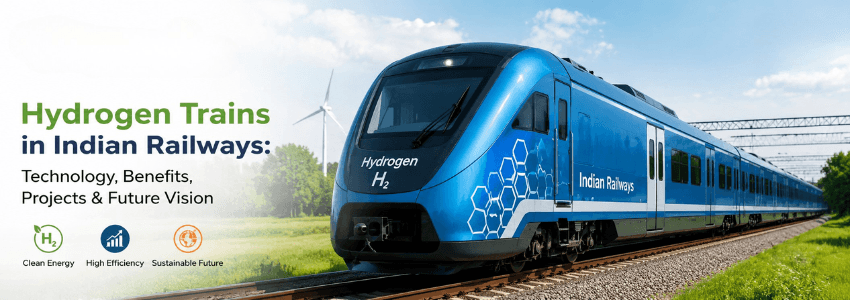
Table of Contents
Imagine boarding a train and order hot meal in train, pizza in train or winter food in train such as piping hot soups without thinking of air pollution in train, carbon footprint in train as well as loud diesel engine. Indian Railways is making this future real with hydrogen technology. In this transformation, even group food in train and Jain food in train experiences will soon be powered by cleaner tech. The introduction of a hydrogen train India project is another story of sustainable traveling with a potential of efficiency, light emissions and a cleaner rail system. This change does not only concern trains, but rather the integration of renewable energy in Indian Railways into normal commuting.
We are going to discuss in this blog what green hydrogen train in india are, the way in which India is adopting it, its technology, its advantages and what is in store for the hydrogen powered train in India.
What Are Hydrogen Trains?
The india hydrogen powered train are rail trains which run on hydrogen fuels in the shape of hydrogen fuel cells instead of diesel and electricity. The hydrogen fuel cell train in India reacts with oxygen and hydrogen to produce electricity and the sole product is water vapor. This renders them a perfect option in efficient rail transport, which is clean.
Unlike the old-fashioned locomotives, which generate electricity with the help of the electricity transmitted to them by overhead electric wires or diesel engines, the hydrogen train india possess hydrogen tanks and fuel cells, which convert the hydrogen to generate electricity to power the electric motors moving the train.
This is the focus of Indian Railways net zero carbon plans.
What Is the Cost of Hydrogen Train in India?
The prices of a hydrogen fuel train in India range depending on the elements of technology, deployment magnitude, and the infrastructure. hydrogen train india are generally more expensive upfront due to:
- Fuel cell systems
- Hydrogen storage tanks
- Safety and handling infrastructure
- Training and maintenance ecosystems
However, lifecycle economics tell a promising story: reduced fuel costs, lesser maintenance than diesel engines, and environmental benefits rapidly offset the initial investment.
In global markets, hydrogen trains can cost 20–30% more than diesel counterparts initially, but savings come from lower carbon tax liabilities and operational efficiencies over time.
India’s Green Transport Vision
India is devoted to the decarbonization of the transport industry. The Ministry of Railways has adjusted its strategy by the national objectives on climate change and clean energy by implementing hydrogen-powered propulsion systems in trains. Through the hydrogen train India initiative, Indian Railways envisions:
- Net‑zero emissions by 2030
- Integrating renewable energy in Indian Railways operations
- Increasing energy security by reducing fossil fuel dependency
- Demonstrating scalable hydrogen solutions in transport sectors
This strategy places India among global leaders exploring hydrogen mobility, alongside countries pioneering hydrogen rail operations.
Indian Railways Hydrogen Train Project and Prototype Overview
The hydrogen powered train in India project of Indian Railways in partnership with foreign technology providers is the flagship of hydrogen technology in India.
The prototype often dubbed the world’s first hydrogen fuel train in India blends tried‑and‑tested technologies with modern fuel cell innovations:
- Hydrogen storage tanks mounted on the roof
- Fuel cells converting hydrogen to electricity
- Battery packs for power buffering and regenerative braking
- Conventional passenger interiors with modern amenities
The pilot runs have focused on proving operational viability, safety, and passenger comfort in diverse Indian rail conditions.
Technology Used in Hydrogen Trains in India
The core technologies enabling these trains include:
1. Hydrogen Fuel Cells
Hydrogen fuel cells are electrochemical units that react Oxygen with hydrogen producing electricity and water as the by-product. This makes them very clean as compared to diesel engines.
2. Hydrogen Storage Systems
High‑pressure tanks store hydrogen onboard at pressures like 350–700 bar. These tanks are designed for safety and efficiency.
3. Electric Traction Motors
The electricity generated from fuel cells powers electric motors similar to electric or battery‑electric trains.
4. Battery Systems
Battery packs store excess energy from braking systems or to provide power during acceleration, improving energy efficiency.
5. Renewable Energy Integration
When hydrogen is produced using renewable sources (like solar or wind), it becomes “green hydrogen” making the overall system part of renewable energy in Indian Railways.
Key Project Specifications of Hydrogen Trains in India
Hydrogen trains in India are designed to match performance and passenger capacity of diesel trains while delivering:
- Zero tailpipe emissions
- Comparable range to diesel locomotives
- Onboard hydrogen refueling
- Safety standards compliant with international norms
These features ensure operational efficiency without compromising environmental goals.
India’s Technical Partners in the Hydrogen Train Project
India has joined hands with global leaders in hydrogen fuel cell technology, including technology firms from Europe and Japan that have successfully deployed hydrogen trains in their domestic networks.
These partnerships bring:
- Technical know‑how
- Fuel cell expertise
- Design and safety standards
- Collaborative R&D for Indian terrains
Through collaborative efforts, Indian needs of the hot plains to the cold north climates are taken into consideration in the technology.
Which Country Is Leading in Operating Hydrogen Trains?
Hydrogen rail projects are in operation in a number of countries:
Germany: Coradia iLint that was developed by Alstom is a first of its kind commercially.
Japan: Extensive research and planned network use.
France & Netherlands: Pilot deployments and expansion plans.
The countries have been pioneering through practical operations that provide both technical and operational standards to hydrogen powered train in India projects.
Environmental Impact of Hydrogen Trains
Hydrogen trains have such advantages to the environment:
1. Zero Tailpipe Emissions
Hydrogen trains do not produce any emissions of NOx, SOx and CO2 that are significant in the elimination of air pollution.
2. Supports Net‑Zero Goals
Hydrogen trains have also been incorporated in the Indian Railways net zero carbon plan and this will contribute towards reducing the national green house gas emission, as the country will no longer be dependent on diesel.
3. Better Air Quality
Reduced pollution along rails enhances the health results of the populations in towns and cities.
Moreover, the environmental benefits of hydrogen production can be increased when hydrogen is generated through renewable sources (solar/wind).
Cost Savings in Indian Train Travel
Although initial investments are higher, hydrogen trains can reduce operating costs over time due to:
- Lower energy costs compared to diesel
- Reduced engine maintenance
- Long‑term sustainability benefits
- Incentives of clean energy from the government.
These economic benefits are reflected in the possible savings of the passengers and could involve fares, in-train services such as food and the amenities.
Future Prospects of Hydrogen Trains in India
The future of hydrogen rail in India looks promising:
1. Wider Deployment Across Routes
After prototype success, hydrogen trains could serve multiple regional routes previously unelectrified or hard‑to‑ electrified.
2. Hydrogen Infrastructure Development
A network of hydrogen production and refueling stations across major depots.
3. Integration with Renewable Energy
Growing renewable energy in Indian Railways to produce green hydrogen locally.
4. Export Opportunities
India may emerge as a hydrogen rail tech hub for other developing nations.
5. Passenger Experience Enhancements
New services including upgraded catering (like hot meal in train, winter food in train, etc.) become more efficient as onboard power systems become cleaner and quieter.
Passenger Experience in the Era of Green Trains
Traveling on a hydrogen fuel train in India will feel familiar but better:
- Quieter journeys
- Reduced vibration
- Cleaner interiors
- Reliable onboard power for lighting, Wi‑Fi, and infotainment
- Sustainable travel pride
Ordering meals won’t be affected whether you choose commuter snacks or group food in train. Innovative services like How to Book Food in a Running Train (By Yatri‑Restro) ensure you can order Jain food in train or your favorite pizza in train with real‑time delivery.
How to Book Food in a Running Train (By Yatri‑Restro)
Even when the train is in motion, passengers are able to place an order of the meal. Platforms like Yatri‑Restro let you:
1. Track your train live
2. Choose from partner restaurants along the route
3. Select meals veg, non‑veg, Jain, snacks, hot meals
4. Schedule delivery at your seat before arrival at next station
This digital convenience pairs perfectly with green train travel fueling comfort without compromising sustainability.
Conclusion
Hydrogen trains will be a change in times of Indian Railways. Technology is transforming railways, whether it is through minimizing carbon emissions (to ordering pizza in train or hot meal in train during scenic trips), or creating an easier travel experience (through displaying information). Hydrogen train India project will generate a greater dedication of India to clean mobility, energy independence and environmental custodianship. As the expectations are toward the growth of the network, minimizing emissions, and improving services to more passengers, the hydrogen-powered rail transportation is one of the pillars of the Indian Railways in the future of Indian renewable energy.
It is also not just the propulsion that is being evolved but it is also nothing short of the reinvention of clean, comfortable and connected rail journey.
Frequently Asked Questions (FAQ)
Q1. What is the distinction between Hydrogen trains and electric trains?
Rather than external electric grids hydrogen trains also produce electricity onboard with fuel cell technology. They do not smoke, unlike diesel engines.
Q2. Are hydrogen trains safe?
Yes. Hydrogen storage and fuel cell systems developed today have strict safety control and design.
Q3. In India, will the hydrogen trains replace the diesel trains?
Over time. They will be able to complement and ultimately substitute diesel traction in particular in non-electrified sectors.
Q4. Is it possible to get food such as Jain meals in hydrogen trains?
Absolutely. Services like Yatri‑Restro enable ordering Jain food in train, group food in train, and more during your journey.
Q5. Is hydrogen production green?
It is generated using renewable energy and then referred to as a green hydrogen hence the entire process is clean and sustainable.
🏷️ Tags
📅 Recent Posts

Monsoon Travel in India for a Safe and Comfortable Journey
September 19, 2026

Budget Train Travel in India for Affordable and Comfortable Family Journeys
September 12, 2026

How to Track Your Train Without Internet with Offline Train Tracking Services
August 29, 2026

How to Get Train Berth Food Delivery Directly to Your Seat
August 21, 2026

How to Plan Advance Food Orders for Wedding Train Travel Groups
August 20, 2026